
CHCDIV001 Work with Diverse People Assessment Answers: 2025 Learner’s Guide
 Ruth Hall
 10 February,2026
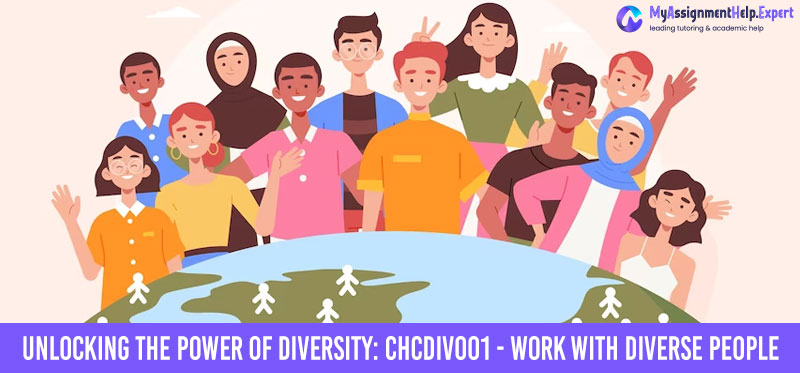
CHCDIV001 is a required unit in many Australian courses. It is part of community and care training. The unit teaches you how to work with people from different backgrounds. It focuses on respect, fairness, and safe behaviour at work.
The assessment checks how you act in real situations. You must show that you respect others. You must also show that you communicate clearly and treat people fairly. Many students find this unit hard because the questions are practical. You must explain what you would do at work, not just give definitions.
Looking for verified Assessment Help or CHCDIV001 answers? This unit checks how you work with people from different cultures. You must show respect and safe behaviour. You must communicate in a fair way. This guide provides a comprehensive breakdown for Tasks 1, 2, and 3 as per the latest 2026 unit descriptors.
Understanding the CHCDIV001 Unit Requirements
CHCDIV001 is a core unit in many Australian community service courses. The unit of competency requires learners to develop skills for working with people from various cultural backgrounds.
The unit teaches students to demonstrate respect and fairness together with safe work practices. You must demonstrate your ability to treat all individuals with equal treatment and compassionate care.
The unit follows ASQA standards which Australia recognizes as mandatory requirements. ASQA establishes the training and assessment guidelines that educational institutions must follow.
The rules ensure that students achieve the required competencies for actual employment situations. Your responses need to maintain both transparency and truthfulness according to this requirement. The assessors need authentic proof which shows appropriate conduct.
The unit provides practical training. The program does not concentrate only on theoretical concepts. You need to describe your work activities and your interactions with other people at your job. You must provide straightforward answers which will help you fulfill the evaluation standards.
Why Is “Working with Diverse People” Important in Australian Community Services?
Australia has people from multiple cultural backgrounds and different ethnic groups. Community service workers have to help others who have different belief systems and distinct requirements.
With over 29% of Australia’s population born overseas (according to ABS data), CHCDIV001 skills are essential for navigating the diverse reality of modern healthcare. Students enrolled in Medical Education must master these skills to ensure patient safety.
Working with diverse people means listening and showing care. It means respecting culture, language, and values. In community services, poor behaviour can cause harm. In clinical settings, good behaviour builds trust. Our Nursing Case Study Help explores how safety and cultural respect work in practice.
CHCDIV001 helps you learn how to act in a fair way. These skills are important in childcare, aged care, disability support, and youth services.
Key Performance Evidence for CHCDIV001
CHCDIV001 has clear task requirements. One task is to reflect on your own views. You must explain how your beliefs affect your work. Another task is to respect diversity. You must show that you accept differences.
The final task is communication. You must explain how you speak and listen with respect. This includes using simple words and calm tone.
Good answers focus on actions. They show what you do, not just what you think. This helps meet ASQA rules and shows clear understanding.
CHCDIV001 Assessment Task 1: Knowledge Questions & Answers
Assessment Task 1 checks your basic knowledge of diversity and fairness at work. The questions are clear and direct. You must explain key ideas in simple words. You must also show how these ideas apply in real work settings. This task focuses on rules, values, and safe behaviour in Australian workplaces. It directly targets chcdiv001 answers because it tests core knowledge needed to pass the unit.
Defining Cultural Safety and Diversity Frameworks
Cultural safety requires organizations to create environments where people feel safe and their cultural practices receive respect. Your actions should not create damage to others. You must refrain from judging people based on their social background. A person needs to feel secure in their cultural identity for cultural safety to exist.
Cultural awareness means knowing that people are different. Cultural competence goes further. It means using this knowledge in your work. It shows in how you speak, listen, and act each day.
Diversity frameworks help workers understand differences. They guide fair and respectful behaviour. These frameworks support safe service delivery for everyone.
Identifying Legal and Ethical Requirements
| Concept | Workplace Application | Legal Reference |
|---|---|---|
| Cultural Safety | Creating a judgment-free environment. | Human Rights Commission |
| Inclusion | Adapting activities for CALD backgrounds. | Disability Discrimination Act |
| Direct Discrimination | Treating someone unfairly due to a protected trait. | Racial Discrimination Act |
| Unconscious Bias | Reflecting on hidden personal prejudices. | ASQA Standards |
The Australian law system requires all Australian workplaces to obey its rules. The Racial Discrimination Act protects people from unfair treatment. The law protects people according to their racial and ancestral heritage. All workers have a duty to treat all individuals with complete fairness.
Understanding the Workplace Gender Equality Act 2012 is a core part of Employment and Industrial Law which supports equal treatment at work. The law establishes equal employment opportunities for all people. The law requires CHCDIV001 students to demonstrate their legislative knowledge through workplace application.
Ethical behaviour means people should act with fairness and honesty. People should treat others with respect. Workers have a duty to report all instances of unjust treatment which they observe.
Cultural bias refers to the situation where personal beliefs shape a worker’s professional conduct. This can lead to poor service. It can also cause unfair treatment. The situation leads to people losing their trust.
CHCDIV001 also covers six types of diversity
The six types of diversity include cultural backgrounds, age groups, disabled individuals, LGBTQ+ individuals, Religious or Spiritual Beliefs, and different gender identities. Workers must respect all forms of diversity.
Good answers show how bias leads to worse service delivery. The response demonstrates why organizations need to practice fair treatment toward their employees.
CHCDIV001 Assessment Task 2: Case Study Scenarios
Assessment Task 2 is based on real work situations. You must explain how you act at work. This task is hard for many students, which is why professional Case Study Assignment Help is often used to ensure respect and fairness are properly documented.You must show safe behaviour, respect, and fairness. Your answers should explain what you do and why you do it. Simple steps are better than long explanations.
This task checks how you communicate with people from different backgrounds. It also checks how you handle problems at work. You must show calm thinking and respectful behaviour. Clear answers help you meet assessment rules.
Dealing with Cross-Cultural Communication Barriers
People from different cultures face communication challenges when their languages and their cultural practices differ. The different aspects of different cultures create potential for people to create incorrect assumptions about each other. The task requires you to describe your approach for handling workplace conflicts.
You should explain that you listen carefully. You should use simple words when speaking. You must not make assumptions.
You should check that the other person understands you. Respectful communication helps reduce mistakes. Respectful communication enables people to establish trusting and safe connections.
Supporting Aboriginal and Torres Strait Islanders
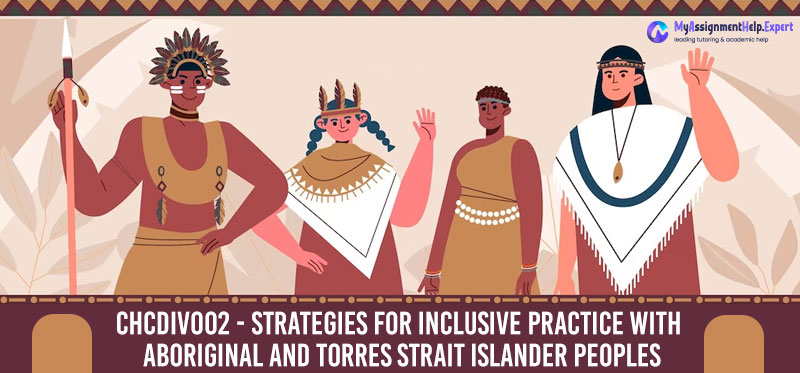
Some case studies focus on Torres Strait Islander peoples. The tasks require people to demonstrate their knowledge about cultural safety. Cultural safety means making people feel safe and respected. The practice requires understanding both current safety measures and historical contexts.
People today develop their feelings through the historical events which have happened before their current time. Trust depends on people knowing which events occurred in the past. Workers must show patience and care.
You should avoid words or actions that may upset someone. A person should communicate through a calm voice while using respectful actions. This shows understanding and supports safe care.
Pro-Tip: When answering Aboriginal cultural safety questions, always mention “Self-Determination” and “Community Consultation.”
Best Practices for Communication
Some situations involve language problems. In these cases, you must decide if help is needed. You should use an interpreter when people do not understand each other. This helps prevent errors. It also keeps everyone safe. Body signals can help support meaning. They should not replace clear spoken words.
Other situations involve people with disability. A detailed Medical Case Study can show you how to focus on the person, not the condition. You must focus on the person, not the condition. You should ask what support they need. You must respect their choices. You should also respect their right to act on their own. Strong answers show care, respect, and clear speech.
CHCDIV001 Assessment Task 3: Workplace Observation & Reflection
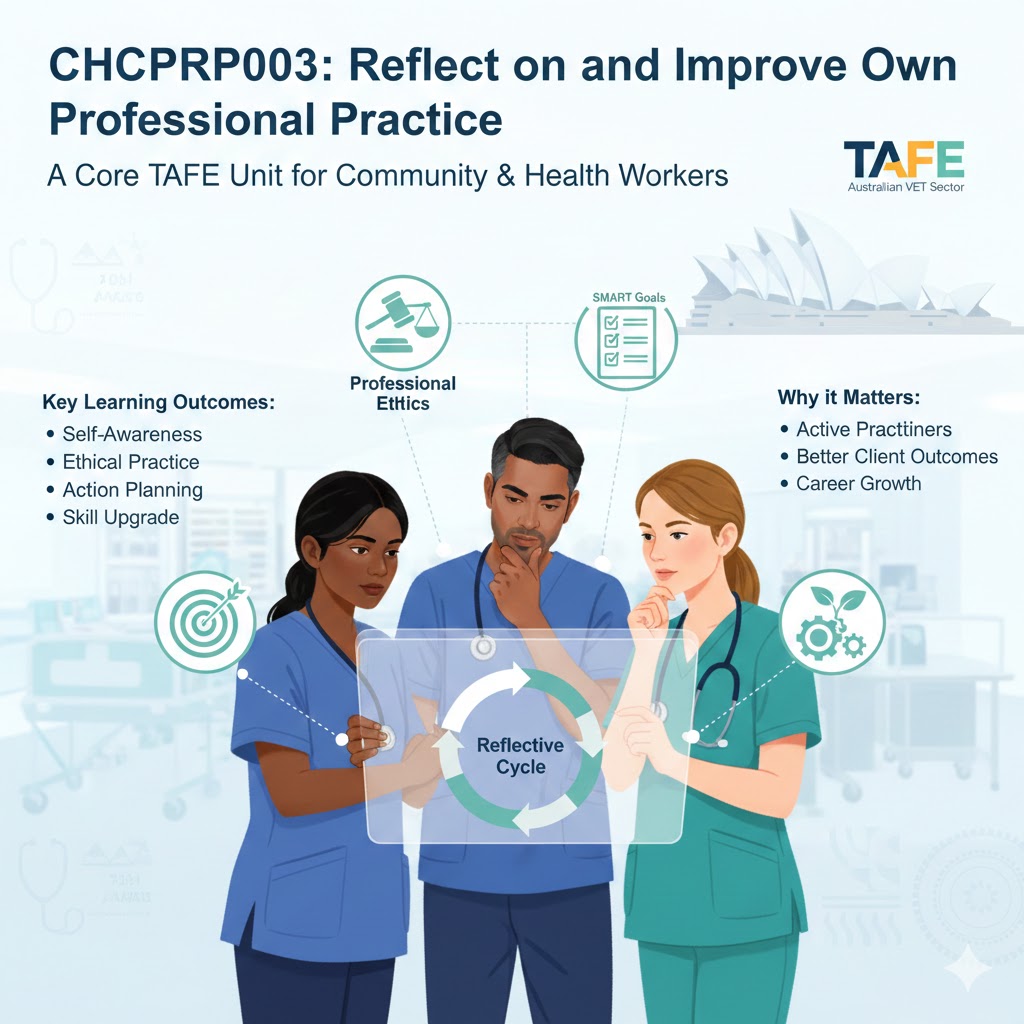
Assessment Task 3 focuses on how you act at work. The assessment evaluates your conduct together with your understanding of the material. You must observe your workplace and reflect on your actions. The task evaluates three values, which include respect and fairness and inclusion. Your answers should describe what you see and what you do.
This task is about soft skills. These include self-awareness, calm behaviour, and respect for others. This is particularly vital in specialized fields like Psychiatric Mental Health Nursing, where soft skills are essential. You must explain your learning process from workplace experiences and your subsequent development to better performance.
How to Document Your Reflective Journal
A reflective journal records what you observe at work. You must write what happened. You must explain your feelings. You must also explain what you learned.
Good journals are clear and honest. Use short sentences. Focus on one event at a time. The explanation should describe what worked effectively and what needed enhancements. The process of reflection shows that you analyze your activities while gaining knowledge from those experiences.
Demonstrating Respect for Individual Differences in a Care Setting
Care settings include people with different needs and backgrounds. You must show respect in your daily work. This includes how you speak, listen, and act.
Self-reflection helps you notice unconscious biases. These are ideas you may not realise you have. For example, you may assume how someone wants support. Task 3 checks if you can notice this and adjust your behaviour.
When conflict happens due to cultural misunderstanding, you must stay calm. You should listen first. You should explain clearly. If needed, ask a supervisor for help. Clear steps help resolve issues in a safe way.
Inclusion is also important. You may need to change an activity to include someone from a CALD background. This could mean using simple language or changing how instructions are given.
Strong answers show care, respect, and fair treatment at work.
Tips to Solve CHCDIV001 Assessment Answers Successfully
CHCDIV001 assessments check how you act at work. They focus on behaviour, not long theory. Many students lose marks because their answers are unclear. Simple words work best. If you are struggling, our TAFE Assignment Help provides clear steps to help you score well. You must explain what you do and why you do it.
This unit focuses on respect and fairness. Strong answers show calm actions and safe behaviour. Avoid long sentences. Write one idea at a time. This helps assessors understand your answer.
Common Pitfalls in Diversity Assignments
One common mistake is giving personal opinions. Assessors want actions, not feelings. Another mistake is using hard words. This can confuse the meaning.
Some students forget to link answers to real work tasks. Others do not explain cultural safety. You must always show respect for others. Avoid judging words. Do not assume how people think or act.
Another problem is not explaining key terms. If a question asks about diversity, you must define it. Short and clear definitions help you meet assessment rules.
Where to Find Reliable Research Resources for VET Students
If you are struggling to structure your findings, check out our tips to write a good assignment or use our UTS referencing tool to cite your sources correctly.
Government websites are also reliable. These follow Australian rules. Avoid random blogs. They may not be correct.
Visual tools can help you understand key ideas. A simple table can explain diversity clearly.
Key Terms to Know
Marginalisation means leaving people out. It limits support and access. Stereotyping means judging people as a group. This can cause unfair treatment. Ethnocentrism means thinking one culture is better than others. This can harm trust.
Clear answers show respect and safe practice at work.
Frequently Asked Questions (FAQ)
Q1. What is the passing grade for CHCDIV001?
CHCDIV001 uses a competency-based system. You do not receive a number score. You must be marked as competent. This means you meet all task rules. If a task is not correct, you may be asked to resubmit.
Q2. How many hours of placement are needed for this unit?
CHCDIV001 does not have a fixed placement hour rule. However, many courses require workplace observation. This may happen during practical training or related work. Your training provider will confirm the exact requirement.
Q3. Where can I find a CHCDIV001 learner guide PDF?
A learner guide is usually provided by your training provider. You can access it through your student portal or course materials. Some providers also share guides during class sessions. Always use official guides to make sure the content follows Australian training rules.
Conclusion: Master Your CHCDIV001 Assessment with Confidence
CHCDIV001 is more than just a study unit. It teaches you how to work with people in a fair and respectful way. This unit builds skills you need for real jobs in Australian community services. These skills include empathy, clear communication, and respect for differences.
The assessment can feel hard. The tasks are long and detailed. You must follow laws and show cultural safety in your answers. This includes understanding Australian rules and fair work practices.
The best way to pass is to stay focused on respect and inclusion. You must also link your answers to Australian law and safe practice. When you understand these key areas, the assessment becomes easier. These skills will also help you in real work settings.
Need a Hand with Your CHCDIV001 Assessment Answers?
Many students feel stressed by long word counts and complex case studies. This is common in RTO assessments. If you need support, customized samples and expert tutoring can help. This support is designed for the Australian VET system and focuses on clear, correct answers.