
Top 5 Financial Modeling Tools Every University Student in Australia Needs to Master
 Min Seow
 07 March,2026
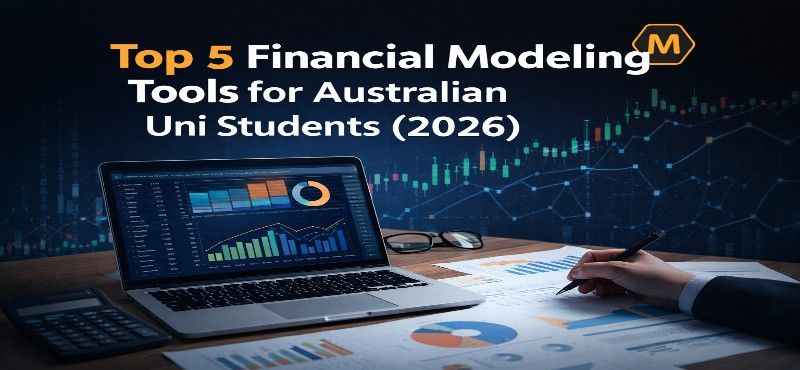
In 2026, the Australian finance industry has changed. Gone are the days when a high GPA was enough to land a graduate role at Deloitte in Melbourne or Macquarie in Sydney. Today, recruiters are looking for technical mastery.
I have seen many students walk into interviews with great grades but fail technical tests. Why? Because they lacked the hands-on experience with the tools that actually drive the ASX and global markets.
If you find yourself stuck in a “Circular Reference” loop in Excel, I’ve found that getting a professional walkthrough via Finance Assignment Help is often better than watching 100 YouTube videos. It helps you unlearn the bad habits that I see many juniors bring into the office. In this guide, I will share my personal experience with each, the common mistakes I’ve seen students make, and how you can avoid them through assignment writing services.
1. Microsoft Excel: The “Non-Negotiable” Foundation
You might think Excel is old-fashioned, but in 2026, it is still the heart of every financial model. Whether you are valuing a mining giant in Perth or a tech startup in Brisbane, Excel for finance students is your primary weapon.
The Experience
When I first started building discounted cash flow (DCF) models, I thought knowing how to sum a column was enough. I was wrong. I soon realized that speed is everything. In my first month at a Melbourne firm, I noticed the senior analysts never touched their mice. That’s when I forced myself to learn Alt+H+O+I. In the “Big Four,” if you use a mouse, you are seen as a beginner.
Why Excel Matters in Australia
In the Australian corporate world, Excel is the “language of business.” Whether you are calculating Net Present Value (NPV) or building a 3-statement model for an ASX-listed company, Excel is where it happens.
- Speed is Key: Professionals don’t use a mouse; they use keyboard shortcuts.
- Data Organization: It allows you to structure messy data into clean, readable reports.
- Legacy Systems: Most Australian firms have their entire history stored in Excel workbooks.
Key Skills to Master:
- Keyboard Shortcuts: Professionals rarely use a mouse. Learning shortcuts (like Alt + H + O + I to auto-fit columns) will make you much faster.
- Financial Functions: You must know how to use NPV (Net Present Value) and XIRR (Extended Internal Rate of Return) to value projects.
- Sensitivity Analysis: Using “Data Tables” to see how changing an interest rate affects the final valuation of a company like BHP or Commonwealth Bank.
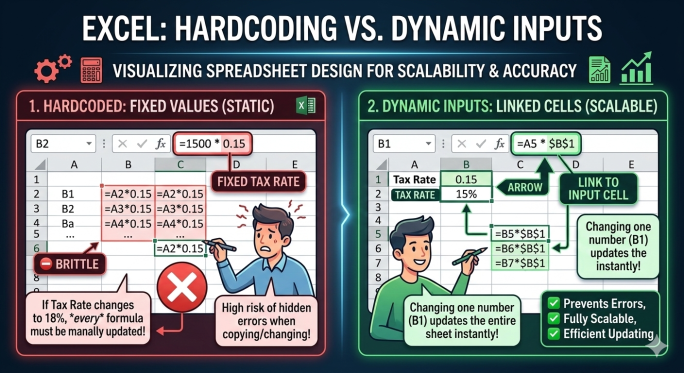
Common Mistake: Hardcoding
The biggest mistake I see students make is hardcoding. This means typing a number (like a 5% tax rate) directly into a formula instead of putting it in a separate “Assumptions” cell.
- Why it’s bad: If the tax rate changes, you have to find and fix every single formula. It leads to massive errors that can cost companies millions.
- The Fix: Always separate your Inputs, Calculations, and Outputs.
If you are struggling with complex circular references or NPV functions, don’t be afraid to seek Finance Assignment Help. Getting a professional walkthrough from MyAssignmentHelp early can save you from building bad habits.
2. Power BI: The Visual Storyteller
Modern finance is no longer just about numbers; it is about “Business Intelligence.” Australian firms like Westpac and Telstra now use Power BI for financial modeling to turn boring spreadsheets into live dashboards.
The Experience
I remember presenting a quarterly report using a standard PDF. The board was bored. The next month, I used Power BI. I showed them a map where they could click on different Australian states to see real-time revenue. The engagement was instant.
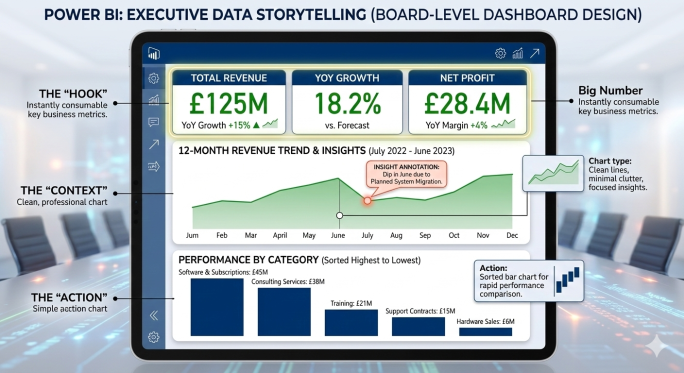
Making Numbers “Pop”
Imagine you are presenting a model for a retail chain like Woolworths. Instead of showing a table of sales numbers, you can show a map of Australia. When the user clicks on “Western Australia,” all the charts update to show that region’s profit margins.
- Ease of Use: Power BI connects directly to your Excel files.
- Storytelling: It helps you explain “the why” behind the “what.”
- Career Edge: Listing Power BI on your LinkedIn profile will catch the eye of recruiters at companies like KPMG and EY.
Common Mistake: “Chart Vomit”
Students often try to put too many visuals on one page. They use 10 different colors and 5 different chart types.
- Why it’s bad: It creates “cognitive overload.” The viewer doesn’t know where to look, and the main message gets lost.
- The Fix: Keep it simple. Use one “hero” visual and a maximum of three supporting charts.
You can also use certified assignment writing services if you still feel confused.
3. Python: The “Big Data” Specialist
You will notice that almost every Python in finance curriculum at universities like ANU or Monash has become much tougher recently. In 2026, Python is the tool we use for “Quantitative Finance” and high-frequency trading.
The Experience
I once tried to analyze 20 years of historical data for the entire S&P/ASX 200 in Excel. The file crashed every five minutes. I switched to Python, used the Pandas library, and the entire analysis took three seconds.
Why Finance Students Need Python
Excel is great, but it struggles with “Big Data.” If you are analyzing 10 years of daily stock prices for every company in the S&P/ASX 200, Excel might crash. Python handles this with ease.
What you need to know:
- Pandas: This is a library used for data manipulation. Think of it as “Excel on steroids.”
- Matplotlib: A tool for creating high-quality financial graphs.
- Automation: You can write a Python script to automatically download financial data from the web every morning.
Common Mistake: Poor Documentation
Students often write code that works, but they don’t explain how it works. They name their variables a, b, and c.
- Why it’s bad: If you look at that code two weeks later, you won’t remember what it does. In a professional team, no one will be able to help you fix it.
- The Fix: Use descriptive names like gold_price_usd and add “comments” (using the # symbol) to explain every step.
If the syntax is giving you nightmares, getting Python programming assignment help is a smart way to learn clean coding standards that will impress your future boss. MyAssignmentHelp offers professional assistance to make it easy for you.
4. Bloomberg Terminal: The Industry Powerhouse
If you walk into the finance lab at your university, you will see those dual-screen computers. That is the Bloomberg Terminal. It is the “source of truth” for the global financial world.
The Experience
The first time I sat at a Bloomberg Terminal, I felt lost. The interface looks like something from the 1980s. But once I learned the “shortcuts,” I could find any piece of data from the price of iron ore to the private jet flights of CEOs in seconds.
If your university has a “Finance Lab,” it likely has a Bloomberg Terminal. This is the expensive, specialized computer system used by professional traders and analysts worldwide.
Getting “Bloomberg Certified”
Mastering the Bloomberg Terminal gives you access to the same data used by Wall Street and the ASX. It provides:
- Market News: See news as it happens, often before it hits the mainstream media.
- Analyst Estimates: See what the top experts think a stock will be worth in 12 months.
- Networking: Bloomberg has its own internal messaging system used by the world’s top financiers.
Most Australian universities offer the Bloomberg Market Concepts (BMC) course for free to students. Completing this is a huge “plus” for your resume.
Common Mistake: Not Logging Out
This sounds simple, but it’s a classic student error in university labs.
- Why it’s bad: Bloomberg licenses are very expensive. If you leave your session open, you block other students and can sometimes hit data download limits that cost the university money.
- The Fix: Always type OFF and hit Enter before you leave your seat.
Most Australian universities offer the Bloomberg Market Concepts (BMC) course for free to students. Completing this is a huge “plus” for your resume.
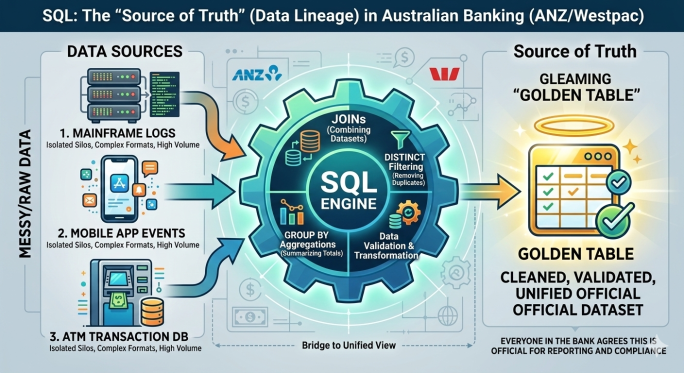
5. SQL: Managing the “Source of Truth”
Data doesn’t just appear in Excel; it lives in databases. SQL (Structured Query Language) is how you get it out.
The Experience
In my first internship, my boss asked for the “average transaction size for customers in New South Wales.” I spent three hours trying to find the right Excel file. A senior analyst showed me a three-line SQL query that did it in three seconds. That was my “lightbulb” moment.
The Language of Databases: SQL
In a large bank like ANZ or Westpac, financial data isn’t just sitting in an Excel file. It is stored in massive databases. SQL (Structured Query Language) is the tool you use to “talk” to these databases.
How Students Use SQL
As a student, you might use SQL to pull specific information for a research project. For example, “Show me all companies in the mining sector with a debt-to-equity ratio of less than 0.5.”
- Efficiency: SQL can filter through millions of rows in seconds.
- Reliability: It ensures you are using the “source of truth” for your data.
- High Demand: It is one of the most requested skills in Australian “Business Analyst” job descriptions.
Common Mistake: The “SELECT *” Disaster
Students often write SELECT *, which pulls every single column from a table.
- Why it’s bad: If the table has 10 million rows and 50 columns, you can slow down the entire company’s network.
- The Fix: Only select the specific columns you need (e.g., SELECT Transaction_Date, Amount).
Summary: Tool Comparison for Australian Students
| Tool | Primary Use | Difficulty Level | Top Australian Employer |
|---|---|---|---|
| Excel | Core Modeling & DCFs | Medium | All “Big Four” Firms |
| Power BI | Executive Dashboards | Low | Retail & Government |
| Python | Big Data & Algos | High | Hedge Funds & Tech |
| Bloomberg | Real-time Market Data | Medium | Investment Banks |
| SQL | Database Management | Medium | Banks (CBA, NAB) |
Other Essential Tools to Watch in 2026
While the “Big Five” are essential, the landscape is growing. I recommend keeping an eye on these as well:
- Tableau: Similar to Power BI but often preferred by marketing-heavy finance roles.
- Oracle BI: Common in very large corporations for enterprise resource planning.
- AI Modeling Assistants: Tools like Cube and Datarails are now helping analysts automate the “boring” parts of Excel.
How to Balance Your Studies and Skill Building
Mastering these financial modeling tools takes time. Between attending lectures and working part-time jobs, Australian students are busier than ever. Here is a simple plan to help you succeed:
Create a Learning Schedule
Don’t try to learn everything at once. Focus on Excel in your first year. Move to Power BI in your second year, and tackle Python programming in your final year.
Use Your Resources
Don’t be afraid to ask for help. Whether it’s a tutor, a study group, or professional Finance Assignment Help, using your resources wisely is a sign of a smart professional.
Practice with Australian Data
When you build models, use real companies. Download the annual reports of Commonwealth Bank (CBA) or BHP. This makes your practice feel real and helps you understand the local market.
Mastering the Curriculum in 2026
With the rise of AI in 2026, financial modeling is becoming even more advanced. New tools like Shortcut and Claude for Excel are now being used by junior analysts to speed up data entry and formatting.
However, these AI tools are only as good as the person using them. You still need to understand the underlying finance. If your Python in finance curriculum feels like it’s moving too fast, remember that you aren’t alone.
In 2026, your knowledge of finance theory is your foundation, but your mastery of these financial modeling tools is your “moat.” It is what protects your career and makes you irreplaceable.
Start small. Master one tool each semester. Don’t be afraid to ask for Finance Assignment Help when the math gets tough, or Python programming assignment help when the code won’t run.
FAQs Every Finance Student Asks
1. Which tool should I learn first to get a job in Australia?
Start with Excel. It is the baseline requirement. Every other tool on this list assumes you already understand basic financial logic in Excel.
2. Is Python really necessary for a standard accounting degree?
It is becoming necessary. Even if you don’t use it daily, understanding the “logic” of Python helps you work with IT teams. Many Australian universities now include it in the core Python in finance curriculum.
3. How do I get Bloomberg certified for free?
Check your university’s finance lab. Most provide access to the Bloomberg Market Concepts (BMC) course. It usually takes 8-10 hours and gives you a certificate for your LinkedIn.
4. What if I am struggling with my Python assignments?
You aren’t alone. Programming is a different way of thinking. Using Python programming assignment help can provide you with clear, commented code that helps you understand how to apply logic to financial data.
5. Can I use these tools on a Mac?
Excel and Python work fine on Mac. However, Power BI is a Microsoft-only tool. You will need to use a Windows “Virtual Machine” or a university computer to practice Power BI.
6. Do Australian banks value SQL?
Yes, heavily. Banks like CBA and ANZ have massive databases. If you can pull your own data using SQL without asking the IT department for help, you become a much more valuable employee.